Monday, May 14, 2012

Joining the disease detective club


In March’s Science in the News, Tiffany, Lindsey and Jon used a hypothetical example of some sick students at a school to discuss what outbreaks are, what can cause outbreaks and how we can protect ourselves. In real life, disease detectives – more formally known as epidemiologists – do many things to help detect, track and prevent disease outbreaks. Some work directly with patients or communities, collecting samples for analysis and helping administer health policies (such as vaccination campaigns). Others are based at organizations such as the Centers for Disease Control and Prevention (CDC) or pharmaceutical companies. They may work as administrators or work in labs.


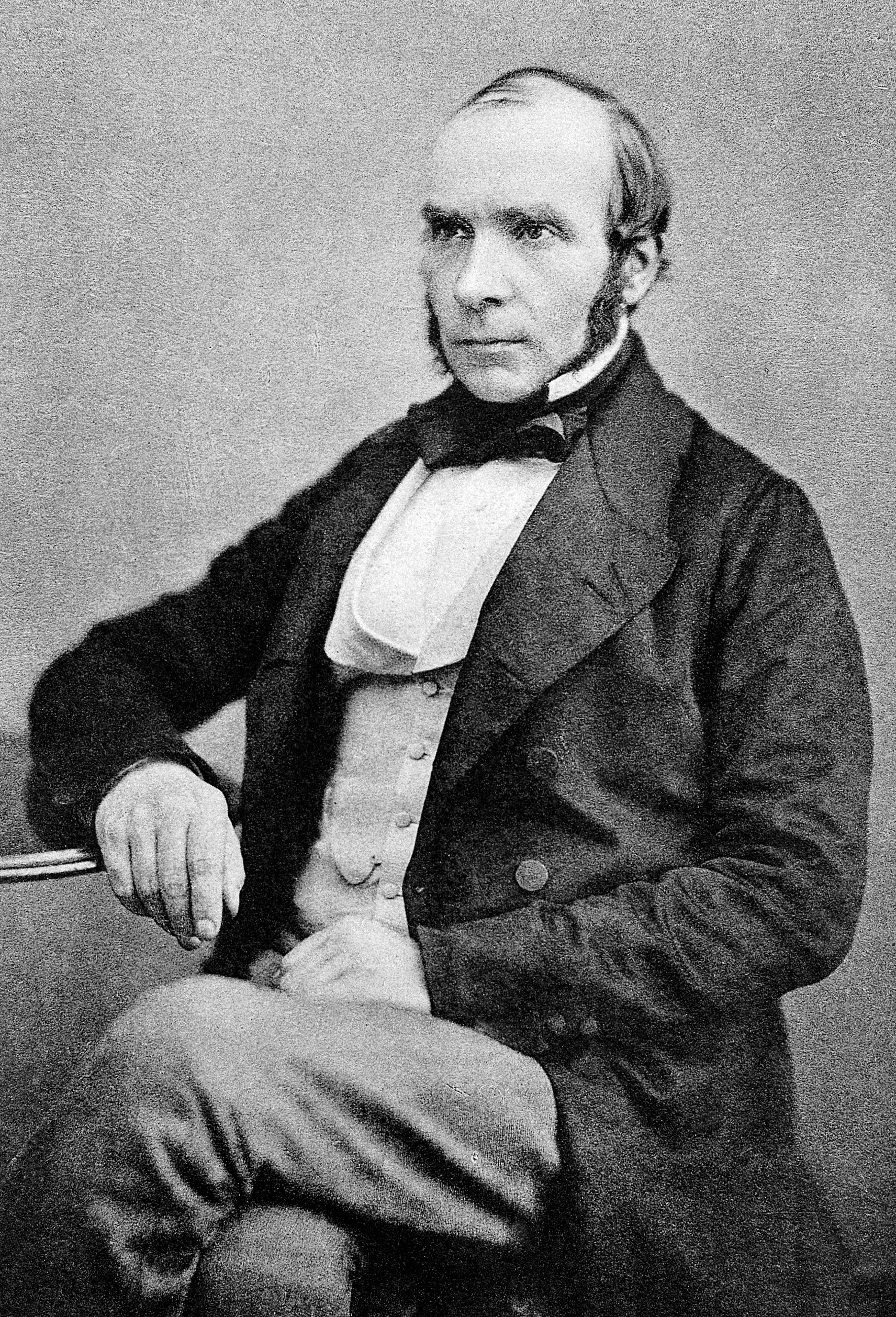
John Snow, the "father of epidemiology" (not to be confused with Jon Snow from Game of Thrones!).
Sources: http://en.wikipedia.org/wiki/File:John_Snow.jpg
 http://sharetv.org/shows/game_of_thrones/cast/jon_snow

When did epidemiology get started? The “father of epidemiology” is often considered to be Dr. John Snow, who determined the cause of a cholera epidemic in London in 1854. Cholera is caused by the bacteria Vibrio cholera, which infects the small intestine, leading to watery diarrhea and vomiting. Without proper treatment, it is often fatal. Historically, cholera epidemics have been both frequent and devastating due to poor sanitation and they continue to occur in less developed parts of the world (in the wake of the 2010 earthquake, Haiti experienced a cholera outbreak that resulted in over four thousand deaths). During the 1854 cholera epidemic, Snow interviewed people to determine where cholera cases had occurred and found that many of them clustered around one water pump. He was further able to demonstrate that areas in the city that exclusively relied on this pump had the most cholera cases. His breakthrough was particularly impressive given that disease transmission was still poorly understood – most people, including most scientists, believed that people got sick through breathing “bad air.” Nobody knew that bacteria could cause diseases. Snow, perhaps unintentionally, set a precedent for evaluating future outbreaks although his belief that disease was not caused by the air was dismissed in the immediate aftermath of the 1854 epidemic.

This map shows how the cholera cases were clustered in the 1854 epidemic.
Source: http://en.wikipedia.org/wiki/File:Snow-cholera-map.jpg

If you’re interested in learning more about the history of epidemics, you might be interested in the following course “Epidemics in Western Society since 1600” (offered here, free, for either video or podcast downloading).

Given the broad range of activities epidemiologists carry out, how does one become an epidemiologist? Epidemiologists are often, but not always, doctors. Non-physicians generally have graduate degrees in epidemiology or public health. Yale has one of the oldest schools of public health in the country (founded in 1915). To find out more about epidemiology and public health research at Yale, check out the School of Public Health’s website.

Changing topics a little, I wanted to expand a bit on two types of tests that Jon mentioned can be used to detect norovirus and rotavirus. Viruses contain DNA or RNA cores protected by a protein shell. Viruses are super tiny and therefore epidemiologists need to use indirect methods to detect their presence. One test is polymerase chain reaction (commonly abbreviated as PCR). In this test, short pieces of DNA (called primers) are used to amplify a known viral gene. If viral DNA is present, the primers will stick to the gene of interest. By using a special enzyme, this gene can then be copied. This stick and copy reaction will be repeated many times. In each repeat there will be exponentially more copies of the gene available for amplification. In this way, you can generate a sufficient amount of DNA to detect and measure.


Source: Saheli Sadanand

Another test that can be used to indirectly assess the presence of virus particles is an ELISA, which stands for Enzyme-Linked Immunosorbent Assay. Although the name makes it sound complicated, it’s actually quite straightforward. In this assay, you are trying to detect antibodies, proteins that our immune system makes to bind to and get rid of pathogens such as viruses and bacteria. To do this, you basically construct a sandwich. In the norovirus and rotavirus example, the bottom layer of the sandwich are virus particles. You then load your sample of interest (for example, blood from the sick patients). Then you add a detecting reagent, which is another antibody – but specific for the non-virus-specific portion of the antibodies. Finally, you add a special chemical that reacts with the detecting reagent to produce a color. The brighter the color, the more virus-specific antibodies that are present in the sample. With the appropriate controls (for example, a sample that comes from a healthy person), epidemiologists can determine whether the amount of virus-specific antibody is abnormal – which would imply that the patient is in fact sick with the virus.

-Saheli Sadanand
5th year Immunobiology graduate student

Wednesday, April 4, 2012

Getting a glimpse of our genetic ghosts: A day of science outreach


Last spring, I participated in Yale’s Science Education Outreach Program (SEOP). We traveled to middle schools around New Haven and Fairfield, CT with the aim to excite children about science by teaching fun, hands-on biology lessons.
---

A class of twenty-seven regards me with mild curiosity. In the back a few girls are speaking in what barely qualifies as a whisper. One boy feints a punch at his neighbor.

To my left is a model of DNA we have assembled for the class, neatly displaying the pairing of nucleotides- always Adenine (A) with Thymine (T), and Guanine (G) with Cytosine (C). You can clearly see the sugar and phosphate backbone that makes the outer rails of the helix twisting around the nucleotide steps. The whole thing looks like the colored spiral staircase of a children’s show. 

“I need a volunteer! You look like a DNA specialist! Could you come help me read the DNA?”

A small girl of about 12 lopes up to the front of the room, the beads in her braided hair flashing excitedly in the afternoon sunlight. She helps me read the DNA staircase top to bottom, and I record her oration on the whiteboard with a cherry red pen.

“A, G, G, T, C, C, G, A, C!”

After thanking my assistant, I draw a sun on the board, and then a jagged beam extending from its surface to the unsuspecting Thymine in our sequence of nucleotides.

“You know how adults always tell you to put on sunblock before you go play in the sun? The sun actually sends out tiny little particles, called ultraviolet rays, that hit your body. When these rays hit your DNA, they can hurt the DNA and cause a mutation. Mutations are when DNA is changed, like making this T into a G.  If you get enough mutations in parts of DNA that control the growth of your body, a small part of your body can grow uncontrollably. This is called cancer.”

The eighth graders look mildly alarmed, but interested. No one speaks, no one texts.

“So, would you like to see what your very own DNA looks like?”

Heads nod with enthusiasm; one boy throws up his hand.

My partner, a vigorously healthy cell biologist, begins to distribute small paper cups holding 6 milliliters, or a little more than a teaspoon, of water. I follow him, passing out wooden stir sticks, our two heads bobbing through the aisles like ducks on a pond. We have both played the role of speaker and assistant over the last several weeks, and so have we learned to complement each other in the classroom. He grins wryly as he hands me my own cup when we circle back to the front of the room.

“All right everyone! To get our DNA, we first have to get some cells! The inside of your mouth is covered in a lot of loose cells that are constantly replacing themselves. We are going to collect some of those cells, break them open, and get out your DNA that is packed inside! 

You know how you have feet and feet of intestines in your belly? Your DNA is very very tightly packed in your cells, kind of like your intestines. Opening up even a few cells can give you lots of DNA.

First you are going to scrape the inside of your cheek with the wooden stick, like this. Don’t do it too hard, but the longer you scrape the more cells will come loose, and the more DNA you will get. Then you will swish the water in your mouth, like a mouthwash commercial, and spit it back into the cup.”

I demonstrate, shameless in the pursuit of education, and I hear a few breaking voices express amused disgust. They follow my lead, scraping and then washing away the taste of pine with the light, flavorless Evian. My partner passes out capped plastic tubes half-filled with soapy salt water.

“Ok, our friend just handed you a tube of soapy water. This soap will help break open your cells. What you are going to do is pour your water into the tube, close it firmly, like this, and slowly turn the tube upside down and back again, over and over, for a minute. My favorite way to do this is make it a dance.”

I take my tube, now filled with mouth cells and soapy water, and arc my hands side to side in an extremely inept but humorous dance move. And twenty-three students do the same. While they jive to science, my partner and I grab ice-cold ethyl alcohol, and pick up transfer pipettes that resemble teaspoon-sized turkey basters. We trace the room again, dropping 1 milliliter of alcohol into each student’s tube, asking them to hold it sill and watch the layer of alcohol that floats above the soapy water.

After a moment, white swirls appear in the clear, cold alcohol at the top of each tube. These ethanol-surrounded ghosts, our DNA, code for everything in our body. Even now, after years in a laboratory, I find its beauty haunting.

My partner and I have the children come to us in groups, and we suck up their DNA with transfer pipettes. We then squeeze out their DNA into little colored tubes, green for one, an ambiguous pink for another. We attach these tubes to a piece of short twine, and the students hurriedly affix their DNA ‘bracelets’ to wrists, ankles, backpacks and belt loops.

They are smiling.

-Katherine Mahala Burn
5th year Cell Biology graduate student

Wednesday, February 15, 2012

Bringing Science out of Yale and into New Haven

When I'm not phasing genotype data, part of my life outside the lab involves organizing talks with the Yale Science Diplomats. Last year we started a Science in the News Series in order to explain some of the science behind controversial headlines, like this one. Science Diplomats are a fantastic group of grad students who, come hell or high water, are really committed to sharing a love and understanding of science with the public. Last year I participated in a talk with my friends Yixiao and Eric on Personalized Medicine focusing on genomes and disease, pharmacogenetics, and stem cells, respectively. People of all ages came out to the Leitner Observatory to learn about what a genome is, what it tells us (and doesn't tell us) and how we can use (and are using) that information to predict, diagnose, and treat disease.

One of the best things that came out of that event was having educators from local public schools in the audience ask us if we'd be willing to bring the talks into the classroom. Keerthi (who keeps a nifty blog of her own you can read here), our outreach coordinator, organized everything for us. After lots of back and forth between a number of schools and finding a time for our talk that fit into New Haven's rigidly packed curriculum, we were able to visit a local high school and talk about awesome science.

This particular high school is something of a rarity. Called the High School in the Community, "HSC" was started by teachers who were frustrated with the state of public education and decided to take teaching into the streets. They were so effective at engaging students that eventually administrators woke up and offered them some physical space (an old factory on Water Street) that has been repurposed into classrooms. Some of these rooms may have poor lighting and no running water, but that doesn't take away from the amazing job the teachers are doing to turn that space into a full-fledged science explosion. I was blown away by the job biology teacher Stephen Zepecki has done to make sure his classroom is teeming with life--only fitting for a biology class. The walls are lined by giant aquarium after aquarium (maintained by the students) filled with all sorts of marine and reptilian life, and there are some veritable flora and fauna in the center of that classroom (it helps that there's a sky light).

The most biological biology classroom.
There is really something to be said about a person who teaches introductory high school biology and is obviously liked by his students. Seeing the rapport this class had with their teacher made it a little intimidating to get up there and give an engaging talk on molecular biology! Yet even from the sidelines, Mr. Zepecki kept the class tuned in. For a school where 40% of the student body has special learning needs ranging from dyslexia to ADHD, you wouldn't know it from the Herculean attention these kids maintained. They're also probably the most respectful audience of high school students I've ever witnessed. It's a testament to both their teacher and their own desire to learn. We're really grateful he let us into his classroom today.
Steve Zepecki, his class, and Eric.
I won't go into the details of the talks because they're viewable on the Science in the News YouTube Channel, but I will say it was a learning experience for us presenters as well as the audience. Sometimes as scientists we fall into the perilous trap of adopting jargon and forgetting how to distill information into its most fundamental and interpretable pieces, and important messages get lost that way. Having graduate student-researchers talk science with high schoolers helps both parties; the high schoolers are exposed to something new, and researchers learn to deliver information in a way that actually conveys what they are trying to say.

A few things to remember for our next classroom visit are that even though most people have heard of DNA, cancer, and stem cells, those concepts haven't necessarily been defined to this age group. Students aren't particularly forthcoming about the limits of their current knowledge, so it's our job to ask them where they are and if they're following us. Also, repetition is key. In retrospect, "single nucleotide polymorphism" is something that I should try to say five-times-fast before moving on to what it's used for. The other thing I'm taking away from this visit is that the Socratic method is really invaluable. There is nothing like having someone arrive at an answer to their own question when they're given the opportunity to think through it critically. Yixiao in particular was very good at this today. The class really woke up when they figured out they'd be accountable for answering their own questions and testing the assumptions on which their answers rested.

Yixiao being awesome.
I'm really impressed with this class. In 90 minutes, we covered the human genome, single nucleotide polymorphisms, single gene disorders, polygenic disorders, risk prediction, direct-to-consumer genetic testing, the Genetic Information Non-Discrimination Act, pharmacogenetics, biopsies, receptors, drug targets, survival curves, cell culture, genetic reprogramming, embryonic stem cells, adult stem cells, and induced pluripotent stem cells. And they took notes. I'm not advocating a crash course like this be the norm, but if all we have is 90 minutes, make each minute count. We shouldn't be so scared to talk science with our kids. They can handle it. They had some pretty insightful comments, too.

My favorite part of science isn't the benchwork or the analysis. It's sharing ideas with other people. It's making others aware of something that only seconds before was inconceivable to them. When you make someone's jaw drop, you know you've done something worthwhile.

-Monica Bowen
3rd year Genetics PhD candidate


This post is a re-post from Monica's own blog, Adventures in Genotyping. Check it out!

Tuesday, February 7, 2012

You're how old?! Piecing together prehistoric ages

SITN presenters: Matt Davis, Tim Webster, and Daniel Field.
During last week's Science in the News, Matt, Dan, and Tim described to us some of Earth's prehistoric inhabitants, and gave us a window into the history of the world before Homo sapiens.  We learned that Torosaurus appeared 70 million years ago, and that the first members of our genus, Homo, walked the earth 2.4 million years ago. Then someone asked a fantastic question: How did we figure out all of these dates? 

Academy of Natural Sciences, Philadelphia - IMG 7436
Source: Wikimedia

Using this Torosaurus skull, let’s figure out how exactly we determine the age of fossils.


Wednesday, January 25, 2012

Dr. Paul Offit, vaccine guru, speaks at Yale

 
Source: sarahmillerbooks, www.paul-offit.com

On Friday January 13, I attended the Beaumont Medical Club seminar in the Yale Medical Historical Library. That night the guest speaker was Dr. Paul Offit, a pediatrician, professor of pediatrics at University of Pennsylvania, and the director of the Vaccine Education Center at the Children’s Hospital of Pennsylvania. He is also the co-inventor of a vaccine to prevent rotavirus infection (the leading cause of diarrhea in young children), and a public proponent of vaccination.

Dr. Offit started his presentation with a brief history of vaccines: from Jenner, to Pasteur, Salk and Sabin, and finally Maurice Hilleman. Interestingly, Hilleman is not a name many people recognize, but Offit considers Maurice Hilleman to be the modern father of vaccines. In sheer number, Hilleman has contributed more to the field of vaccinology than any other single scientist. He developed a staggering nine different vaccines—including ones for measles, mumps, hepatitis A, and chickenpox, among others—and is the subject of one of Offit’s books: Vaccinated: One Man’s Quest to Defeat the World’s Deadliest Diseases.

Dr. Offit then discussed the current CDC-recommended vaccination schedule, highlighting not just the number of shots kids receive these days (26 doses within two years of life), but emphasizing some of the debilitating and crippling infectious diseases that are now preventable because of vaccines. Also worth mentioning, Dr. Offit laments, is the fact we now live in a society in which young parents have never encountered many of these preventable diseases and, therefore, don’t fully understand the risks associated with delaying or denying their children’s vaccinations.

Following this introduction, Dr. Offit moved quickly into the public perception of vaccines and how we’ve arrived at the forefront of medical controversy. The most interesting detail that I took away from this history was that there was actually very little opposition to vaccination in the earlier part of the 20th century. This was despite good cause for alarm, including a large-scale polio outbreak in 1955 from the Salk polio vaccine made in Cutter Laboratories (the subject of another Offit book, The Cutter Incident: How America's First Polio Vaccine Led to the Growing Vaccine Crisis). It wasn’t until the founding of the National Vaccine Information Center (NVIC) in 1982 that the anti-vaccine movement really began. Despite its name, the NVIC provides little material on vaccine efficacy and vaccine-preventable diseases. Instead, the group focuses on providing information on vaccine safety and vaccine-associated side effects and injuries. In addition to the birth of the NVIC, Dr. Offit believes that the documentary DPT: Vaccine Roulette, which was written, directed, and hosted by the actress Lea Thompson in 1982, was also partially responsible for the start of vaccine dissention. This program claimed that the diphtheria, pertussis, tetanus (DPT) trivalent vaccine caused brain damage. It featured harrowing stories of children suffering from brain damage and seizures after receiving their DPT vaccine. Offit believes this was one of the most powerful programs to ever air on national television and that it paved the way for all of the future vaccine-injury scare tactics by the anti-vaccine movement.

Following the founding of the NVIC and the airing of the DPT documentary, there was an immense rise in the number of lawsuits by individual families against vaccine manufacturers. This resulted in skyrocketing prices of liability insurance and vaccine production costs for pharmaceutical companies, leading to reduced vaccine production and ultimately vaccine shortages. Dr. Offit notes that by 1985 only one DPT vaccine manufacturer remained in the U.S. and the drastic reduction in the number of vaccine manufacturers necessitated government intervention. In 1986, Congress passed the National Childhood Vaccine Injury Act, which created a federal Vaccine Injury Compensation Program (VICP) in order to reduce the financial liability of vaccine makers. Of course this hasn’t tempered the enthusiasm of anti-vaccination advocates, but at least the pharmaceutical companies could continue to produce enough vaccine.

Then in 1998, British doctor and scientist Andrew Wakefield published a paper in the journal The Lancet in which he proposed that the measles, mumps, rubella (MMR) vaccine caused autism. He reached this hypothesis by claiming that measles virus could be found in the intestines of intestinal bowel disease (IBD) patients. IBD is quite prevalent in autism patients; therefore, he proposed that the measles part of the MMR vaccine causes autism. However, this paper was not a scientific study as much as it was a small case series of eight autistic children. This claim has been discredited by more than 14 independent scientific studies, yet the allegation remains as vigorous today as it was back then. Dr. Offit spoke quickly about the contributions of Wakefield to the anti-vaccine movement. It almost seemed as if his dislike for Wakefield was enough to keep him from persisting on the topic, but it should be noted that The Lancet paper was retracted in 2004 and the British General Medical Council revoked Wakefield’s medical license, citing numerous ethical violations and fraud.

Today, the “face” of the anti-vaccine movement has shifted to celebrities and public officials, including actress Jenny McCarthy and GOP candidate Michelle Bachmann. “I don’t know about you,” Offit said, in probably the funniest quip of the night, “but I always get my medical advice from Michelle Bachmann.” The audience chuckled, but Dr. Offit seemed wary of dwelling too long on this point. He did mention that the narration of personal stories about the suffering of children pulls at everyone’s heartstrings. “You’d have to be non-human to not feel bad for those kids on the DPT: Vaccine Roulette special,” Offit said. Because of outbreaks from vaccine-preventable diseases such as polio and measles, we now have the personal stories and emotional anecdotes in support of vaccination. It’s a sad truth that we have to use the suffering of children to make this point, but the anti-vaccine movement has been manipulating people with scare tactics for years.

During the Q & A someone asked, “What can we do when we’re not asked to give our side?” and cited the absence of a vaccine expert or scientist during Jenny McCarthy’s appearance on the Oprah Winfrey show. Interestingly, Dr. Offit nodded his head knowingly, and said, “Oh, I was invited to go on that show.” He chose not to go, he said, because “Oprah’s show is meant to entertain, and in any good story there are three roles to play: there’s a hero, a victim, and a villain. Well, Jenny is the hero, her son is the victim, and that only left one role for me.” Offit suggests that we all use emotional and personal stories like the anti-vaccine activists and get out there and share our knowledge. Another great point that I took away from the lecture was that there is no venue too small to stand up for science—and we shouldn’t let misinformation go unchallenged.

The microphone was then handed to someone behind me who started shouting quickly and energetically before I even had a chance to turn around.  I didn’t catch his name at the time, but I found out later it was Jake Crosby, a young man with Asperger's Syndrome and a contributor to the Age of Autism website, which is not so much an autism awareness website as it is a venue for anti-vaccine propaganda. However, all that Mr. Crosby was allowed to say into the microphone was his name and affiliation, followed by the beginning of a question regarding Andrew Wakefield, before Dr. Offit shouted out, “Let me just stop you right there!” Dr. Offit proceeded to tell the audience that Jake was following him around the country and disrupting his seminars and that he had obviously “made it” since he now has a stalker. I agreed with Mr. Crosby’s assertion that he should be allowed to ask a question and personally thought that Dr. Offit disrupted his own seminar more than simply answering the question would have caused. Regardless, Jake Crosby got up and left under his own will. Although I appreciate Mr. Crosby's enthusiasm for increasing autism awareness, sensationalizing his interactions with Dr. Offit on his Age of Autism blog does little to further his cause.

The microphone made its way to a woman during the Q & A, whose question was more of a tirade and by the end of her rant I wasn’t quite sure where she had started or where she was going. She seemed not to be against vaccination per se, but was very concerned about autism and she appeared to be asking Dr. Offit whether he would debate Andrew Wakefield in a public forum. Dr. Offit asked for her name, replying “Ohhh, you’re Mary Holland!” after her response. Mary Holland is an attorney and co-editor of the book Vaccine Epidemic: How Corporate Greed, Biased Science, and Coercive Government Threaten Our Human Rights, Our Health, and Our Children. The book highlights the necessity for informed consent for all medical interventions, including vaccination, which I believe is a reasonable topic for discussion. However, this book is also a cover for anti-vaccine philosophy and includes chapters on and written by Andrew Wakefield and the debunked link between MMR and autism as well as a variety of other conspiracy theories. Getting back to the Q & A, Dr. Offit was very frustrated with Mary Holland’s request for debate because all the scientific evidence discredits any link between vaccines and autism. “What is there to debate about? The scientific data is the truth,” Offit replied. Mary Holland is an attorney, so she can probably debate just about anything, and she continued to push the notion that vaccines can and have caused autism, citing rulings by the federal vaccine injury compensation program (VICP) as proof of causality. What’s lost in this reasoning is the fact that the VICP is a no-fault program, meaning that the biological cause (in this case, a vaccine) of a side effect or disease does not need to be scientifically validated to provide compensation. Unfortunately, Mary Holland’s audience (outside of this particular venue) probably doesn’t realize this is an empty argument.

As for the future of vaccination, Dr. Offit was surprisingly optimistic. He thinks that despite the accessibility of misinformation, we’ve turned a corner in getting the truth out there. Besides from mandating vaccination, a program he has pioneered for all employees in his own hospital, we can only provide parents with correct, scientifically valid information. He hopes, and I do as well, that enough parents make the choice to vaccinate their kids so that herd immunity can protect us all.

-Heather D. Marshall, Ph.D.
Postdoctoral fellow
Immunobiology Department, Yale University


For more information:


Wednesday, January 18, 2012

Research Works Act in Name Only

The Research Works Act (H.R.3699.IH) does not actually make research work. It allows publishers to charge exorbitant fees to view research payed for by the public that is submitted and edited for free by scientists.    

The fruits of academic endeavor should be available freely for the enrichment of all. Right now, a large portion of academic research gets paid for by the federal government through programs like the National Science Foundation (NSF). In fields that don't have pharmaceutical or commercial applications like my own (paleontology), almost all funding can come from the government. However, when this research is published in peer reviewed journals, the publishing companies are allowed to copyright the data and demand exorbitant subscription fees for other researchers just to read the articles. The journals get free content and free editing by academics yet they charge through the nose for their publications. The result is that researchers from poorer countries or institutions and interested members of the public cannot afford to view actual scientific studies. Rich institutions like Yale can afford subscription fees, but much of their budget comes from grant overhead on these same federal grants. Effectively, the government pays for the research and the editing, and then has to pay again just to read what it already wrote. Publishers do add value to scientific papers by archiving, advertising, and distributing them. But the whole point of publishing your findings is so that others can read and critique your results and learn from your conclusions. Denying people from reading your work, especially if it was publicly funded, is antithetical to the aims of science. This is a small bill but it could greatly limit our access to the latest scientific and medical research. If the taxpayer paid for it, she should own it. Free data is not just good science, it's good economics too.

-Matt Davis
2nd year Geology and Geophysics graduate student

Other links:

New York Times editorial against the bill by UC Berkeley Associate Professor Michael Eisen

Michael Eisen's blog post about the bill featuring good arguments on both sides of the issue

The Copyright Alliance's statement in support of the bill

The Association of American Publishers statement in support of the bill


This post represents the views of an individual author, and does not necessarily reflect the views of Yale Science Diplomats.

Thursday, January 12, 2012

Science in the News: Location Scouting

An important part of the planning for Science in the News 2012 is finding a great location. Last year we had the privilege of hosting the series of talks at the Leitner Family Observatory and Planetarium. We were very happy to start our series there and get the support of the students and employees of the Observatory, however the location is a bit hard to find (for good reason, of course; you want to be at the top of a hill to see stars).

This year we decided to explore other location options. We had heard that the New Haven Free Public Library (NHFPL) Ives Memorial Library (main) branch had just renovated their Program Room, so we decided to check them out.

The NHFPL building was built between 1908-1911 and is really gorgeous. It was designed in a Colonial Revival style made of brick and marble. Large white columns greet you as you walk up the steps on the outside that lead into a lovely entrance of the spacious three story library.1,2


Source: http://newhavenlibrarypatrons.com

NHFPL really is a city landmark, situated right across the New Haven Green on Elm St. and Temple St.  Aside from being beautiful and centrally located in downtown New Haven, it is right across the street from a Yale parking lot that has free parking on weekdays after 4pm.


We were really excited about connecting with the NHFPL, since it already is a great resource for our community. However, we didn’t want to miss out on seeing the space it in person first. On a cold December evening, six of us took a field trip downtown and met up with Kathie Hurley, the library’s Public Information Officer, who gave us a tour of their facilities.  I took some quick pictures with my phone, so I apologize if they’re a little bit blurry.


The entrance to the room we would be using is very clearly marked. :)

As you can see below, the room is very large. It can definitely fit our audience comfortably. The chairs weren’t set up on the day of the tour, but you can see a stack of them on the right. (We visited on the day of their holiday party, so some festive decorations were up to greet us).


Not shown is a white screen that comes down in front of the back window. You can see a standard podium that will be perfect to hide our laptops well—although I hope our speakers won’t do the same! There is also a lot of adjustable lighting on the ceiling. They really did a beautiful job with the renovation (although I had seen this room before).


This next photo is not just a great candid shot of Madam President, Elizabeth, but shows a neatly hidden cupboard (on the right) where all the fancy projector electronics are hidden. There’s also a glass window to the kitchen.


I must admit I am quite excited that the kitchen area is so close to the action. So you can take a sneak peak at where we will be preparing all the yummy snacks and drinks for our audience.


If you can’t tell, Kathie was very excited to meet us. She’s a local and loves when Yale students interact with the community. We are obviously very excited to do this, and love the support from her!

Overall, I have to say I’m very happy with the space and more importantly, the support that we got from Kathie about having the Science in the News series at the library. I think this will be a great partnership, that will hopefully last many years!

New Haven Free Public Library
133 Elm St.
There is a convenient side entrance that leads more directly into the Program Room on Temple Street. We will try to have signs directing our audience there.

Science in the News will have six talks this semester, on the last Tuesday of every month from January through June, at 6pm.

-Griselda Zuccarino-Catania
6th year Immunobiology PhD candidate
Science in the News Co-Director